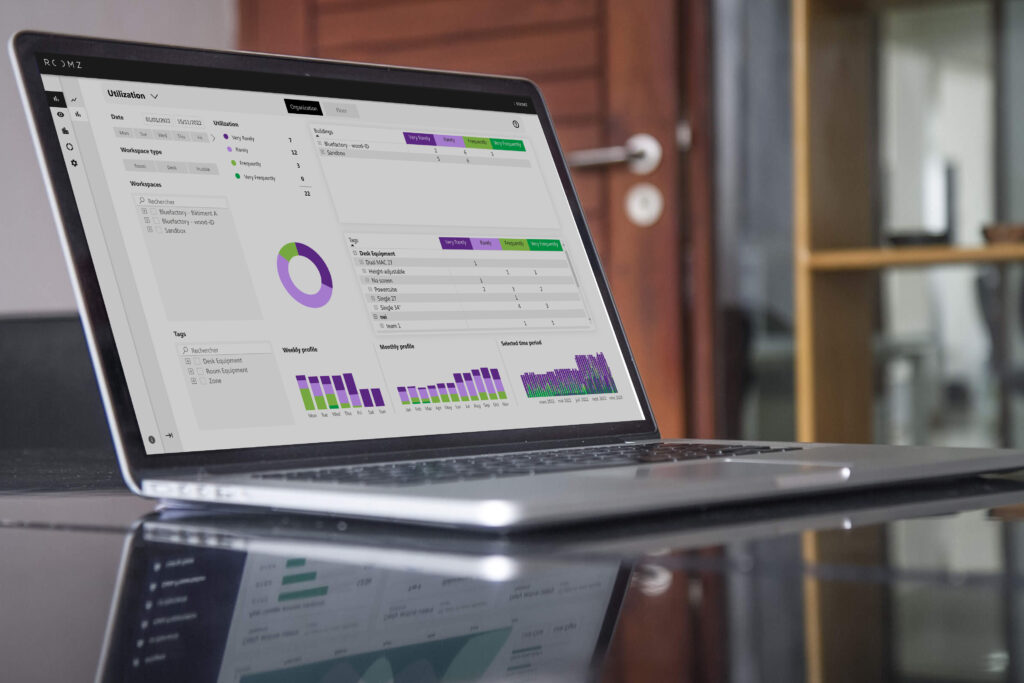
For UAE and GCC office leaders, "utilisation" is only useful when it changes a decision. A calendar may show a room booked, yet it cannot confirm whether people met there. A desk plan may allocate 80 seats, yet it cannot reveal which zones support productive work. That is where workspace analytics UAE teams can act on becomes valuable.
From booked to actually used
ROOMZ Advanced Analytics brings together actual usage signals across desks, meeting rooms and collaborative spaces. Instead of relying on assumptions, facilities, workplace and IT teams can use the data to identify patterns, test changes and improve the workplace experience without rushing into a costly redesign.
A booking calendar records intent. Usage data adds operational context. When these views are reviewed together, an office can investigate recurring gaps: a room that is frequently reserved but seldom used, a popular collaboration area with no bookable capacity, or a desk zone that remains quiet on office days.
The aim is not to police employees. It is to give workplace teams a better factual starting point for conversations about space, policies and service levels. In a hybrid office, that can mean validating whether the current mix of focus desks, small rooms and team spaces reflects how people really work.
Three practical questions for workspace analytics UAE teams
1. Which spaces should be adjusted first? Review consistent patterns over an agreed period, then prioritise the areas where a small intervention could remove the most friction.
2. Are meeting rooms the right size? If demand clusters around smaller rooms while larger rooms are underused, room layouts or booking rules may need attention.
3. Is the hybrid policy supported by the space? Compare workplace usage with the days and areas employees choose. This helps facilities managers plan amenities, cleaning and future capacity more confidently.
Turn insight into a controlled improvement cycle
Analytics are most valuable when paired with a simple operating rhythm: establish a baseline, agree a hypothesis, make one targeted change, and review the result. For example, an office could repurpose an underused enclosed room into two focus booths, then observe whether demand shifts rather than assuming the change worked.
ROOMZ supports this approach alongside its desk, room and collaborative-space solutions. Its platform is designed to work with existing collaboration environments, including Microsoft 365, Google Workspace and Exchange. That gives organisations a practical bridge between scheduling information and workplace reality.
For UAE and GCC businesses, deployment also matters. As the official ROOMZ distributor for the Middle East and India, Fidelis Logic can help assess the workplace use case, plan implementation and translate analytics into practical next steps. Start with the spaces creating the most daily friction, then use evidence-not anecdote-to guide the next decision.


